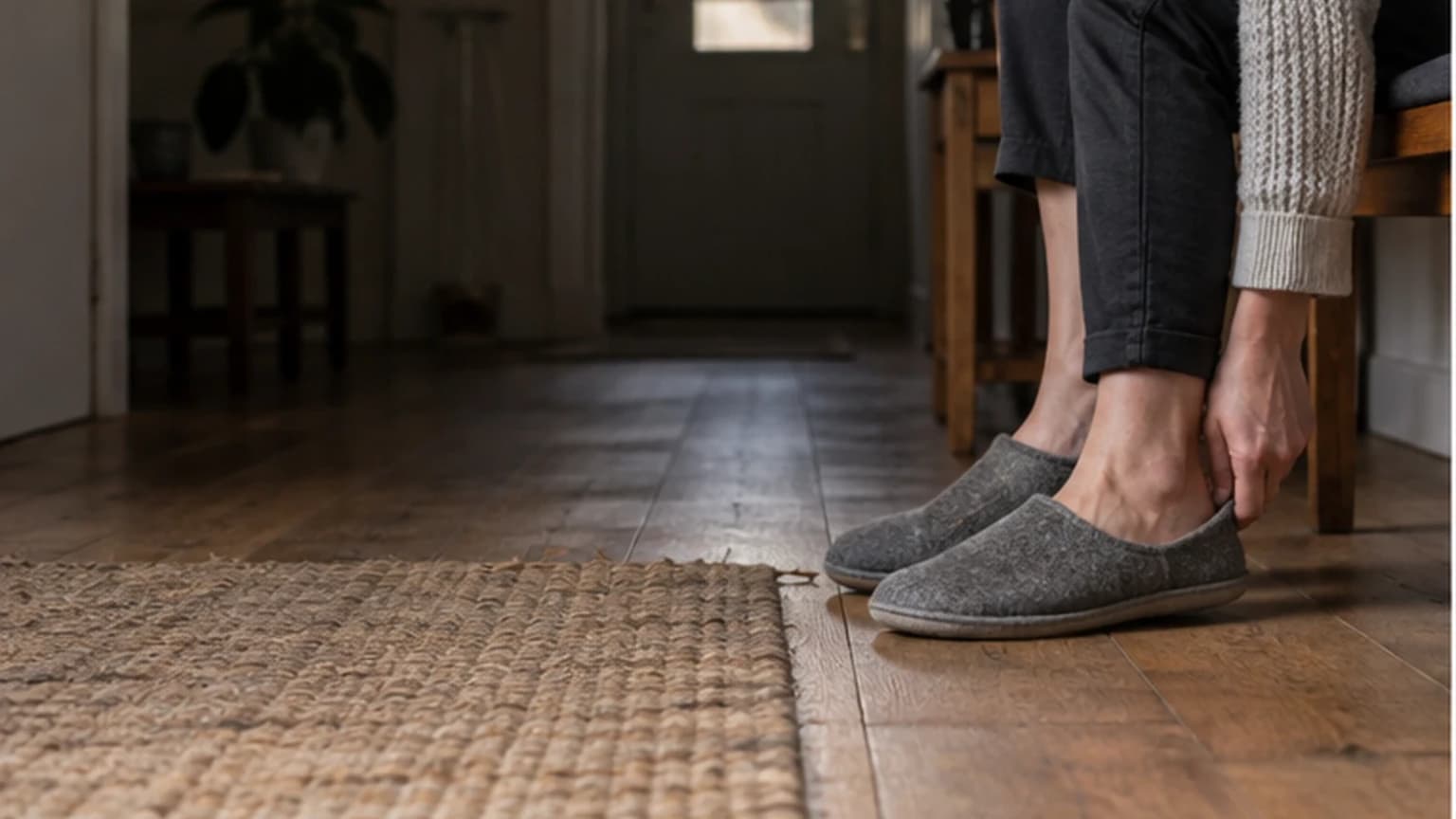
Warm feet, without the squeeze
Barefoot Slippers: What to Look For Before You Buy
Warmth is only half the decision. Compare toe room, volume, sole feel and whether the slipper needs to stay indoors or handle quick trips outside.
Before the detail
The short answer
Start with where you will wear them. A soft indoor slipper and a tougher slip-on that can step outside are different jobs, even when both are sold as barefoot.
For a warm indoor option, compare the Softstar Fireside. For a lighter wool slipper, look at the Wildling Lotus. Then use the slippers directory for the wider catalogue.
Start with where you will wear them
The first question is not whether a slipper looks minimalist. It is where you expect to use it.
If it is staying inside, I would prioritise warmth, toe room and a sole that feels comfortable on hard floors. If you want to take the bins out, walk to the van or cross wet paving, the outsole and how securely the slipper stays on your foot matter much more.
That is why I would not try to find one “best barefoot slipper”. A soft wool house slipper and a rubber-soled slip-on solve different problems.
Useful starting points
Two slippers worth comparing first
At a glance
Two very different slipper starting points
Choose by the job first. Neither is a universal best.

Softstar Fireside Sheepskin Slipper
Choose it for
Maximum indoor warmth
A genuine sheepskin slipper with a brushed suede sole, an adjustable cuff and replaceable sheepskin insoles. Softstar offers regular and wide fits and says the slippers should feel snug when new because the sheepskin stretches with wear.
The trade-off: The soft suede sole is indoor-first, and the leather will relax over time. Softstar recommends sizing down if you are between sizes rather than buying extra room that may become sloppy later.
Shop the Fireside at SoftstarView the Fireside
Wildling Lotus
Choose it for
A light wool house slipper
Wildling describes the Lotus as a lightweight felted-wool slipper made from 90% German merino wool with recycled wool fibres in the blend. Its current fit guidance says to choose your normal size.
The trade-off: The Lotus is water-permeable and not machine washable. Choose it for a light indoor feel, not because you need a tougher step-outside slipper.
Shop the Lotus at WildlingView the LotusThese are starting points rather than a ranking. The Softstar Fireside leans hard into indoor warmth. The Wildling Lotus is the lighter wool option. If neither matches the job, the slippers directory gives you the broader current catalogue.
Fit, warmth and the sole
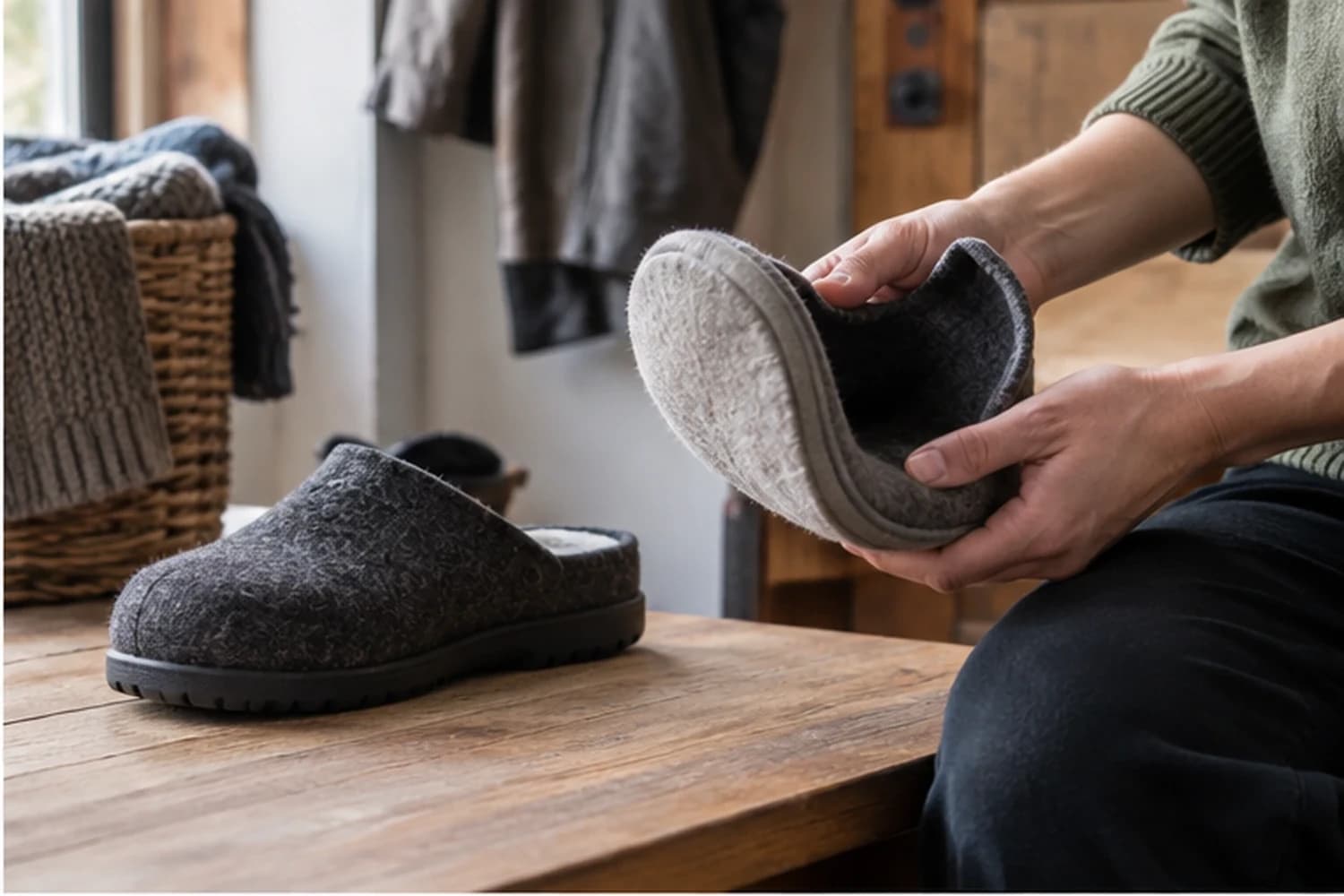
Give your toes room without making the whole slipper loose
Look at the shape of the front, not only the width label. Your toes should be able to lie comfortably rather than being pushed together, but the slipper still needs enough hold through the heel and instep that you are not gripping with your toes to keep it on.
Volume matters here. A slipper can be wide enough across the forefoot and still feel too tight over the top of the foot, or so loose that your heel lifts on every step.
Warmth changes the fit
Wool, felt, fleece and sheepskin all add bulk as well as warmth. Try the slipper with the socks you actually plan to wear. If a thick sock turns a good fit into a cramped one, changing the sock is usually cleaner than buying unnecessary extra length.
Decide how much sole you need
A very soft indoor sole can feel great around the house but may not give you the grip or durability you want outside. A more substantial rubber outsole handles more surfaces, but it also changes the feel underfoot.
If regular trips outside are part of the job, treat that as a separate requirement rather than hoping an indoor slipper will cope. Look for an outsole intended for pavement, enough heel security for walking, and an upper you are happy to expose to damp or dirt.
Do not use “zero drop” as a shortcut for the whole decision. Sole thickness, flexibility, tread and how securely the upper holds your foot all matter.
Keep socks as a separate decision
The old version of this guide mixed slippers and socks together. They overlap, but they are not the same buying problem.
If your current socks squeeze your toes, take up too much room or rub between the toes, the dedicated socks guide compares ordinary wide-toe socks, toe socks and tabi by use. You do not need special socks merely because you wear barefoot slippers.
The five-minute slipper check
Try the slippers indoors with the socks you will actually wear. Stand first: your toes should lie flat, the upper should not press painfully over the instep and you should not need to curl your toes to keep the slipper on.
Then walk on the surfaces you actually have at home. Check heel lift, whether the sole slips on smooth flooring and whether the slipper stays comfortable when you turn or use stairs.
Finally, check the returns policy before wearing them outside. If you want more current options, browse the slippers directory. If what you really want is an easy-on shoe with more outdoor security, compare the clogs guide instead.