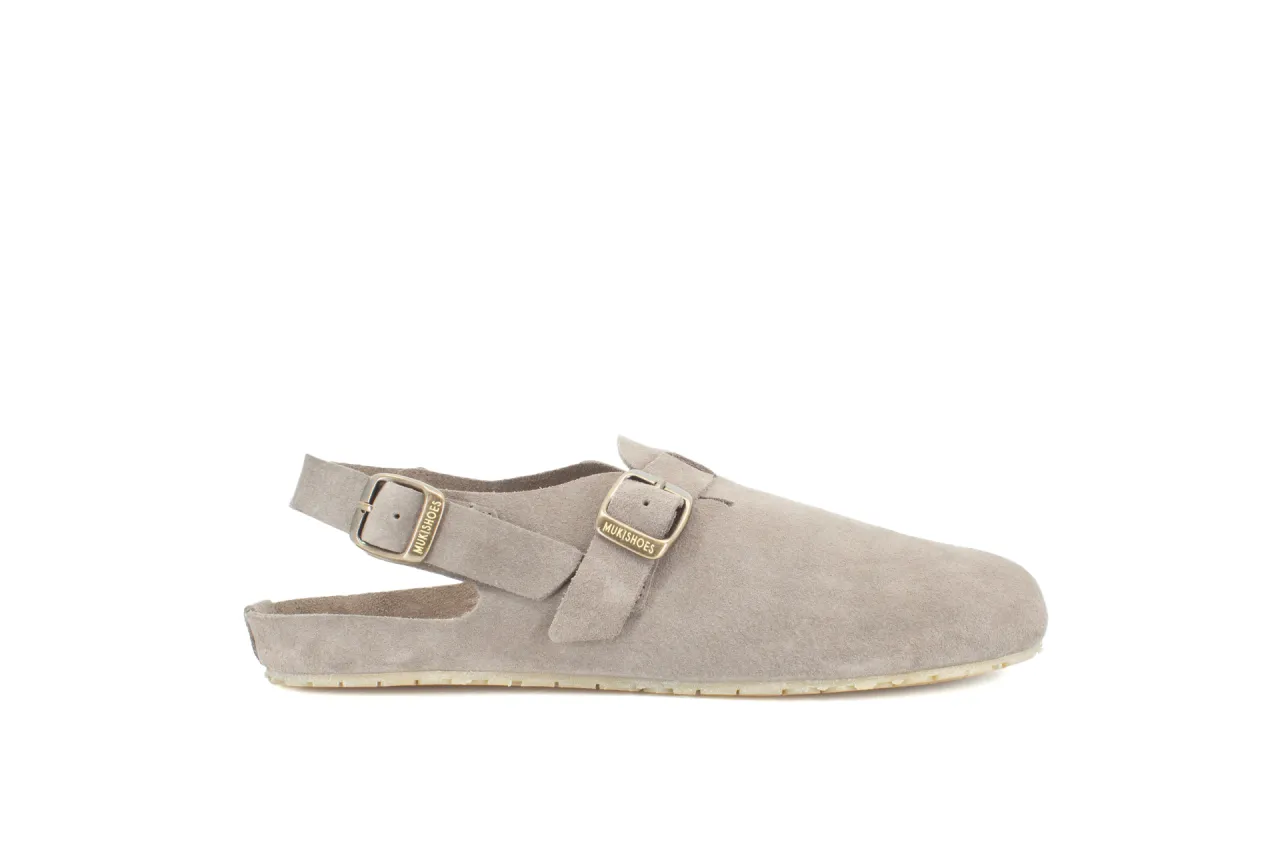
Toe shape and instep volume
Look at the outline, not only the word “wide”. Your toes should lie flat without being pushed together. Then check the top of the foot: buying extra length just to create instep room can leave the whole clog too loose. If the Soca is your starting point, use Mukishoes’ measurements rather than assuming your normal EU size.
Heel security
Open-backed clogs trade some security for easy on-off wear. If you are walking quickly, travelling or using uneven ground, a strap or more adjustable upper matters more. The Bedrock Mountain Clog is the one here with three adjustment zones. You should not need to claw with your toes to keep a clog on.
If it feels floppy, fix volume before adding length
Use the adjustment the clog already gives you first. Tighten the instep or heel strap, then try it with the socks you actually plan to wear. A removable insole can take up spare volume when the maker allows one, but it also reduces space over the foot. Do not automatically buy extra length to solve width or instep pressure - that can turn one fit problem into heel slip.
Sole thickness and surface
Zero drop does not automatically mean thin or flexible. The Soca is the thin end of this shortlist at 3.5 mm; the Zen Clog gives you an 11 mm everyday middle ground; the Mountain Clog uses a 16 mm cushioned platform and trail-focused outsole. Match that amount of structure to the surfaces you actually use.
Weather and suede care
Treat a suede clog as suede, not as a waterproof boot. Bedrock says its Mountain Clog suede is not pre-treated with water or stain repellent and suggests a suede waterproofing spray before first use. Lems lists Nikwax Nubuck & Suede Proof Spray as a care option for the Zen Clog, so that is the exact product I would start with if you want extra water repellency on compatible suede. Follow the maker’s care advice and test any treatment carefully because it can change the finish.