Everyday barefoot boots
Barefoot Chelsea Boots: Find a Pair That Fits
The pull-on boots I wanted to keep wearing, with room for my toes. Here’s what to look for, from thin soles and vegan uppers to a pair for wet days.
Before the detail
The short answer
Room at the toes, a secure heel, and enough space over your instep. Those three things matter more in a Chelsea boot because you can’t adjust the fit with laces.
For a thin sole, start with the Mukishoes Chelsea Cork. For wet weather, compare the Lems Chelsea Boot Waterproof. The Feelgrounds Chelsea is the leather-free everyday option; the Xero Ridgeway Chelsea adds a more pronounced tread.
Keeping the Chelsea boot, losing the squeeze
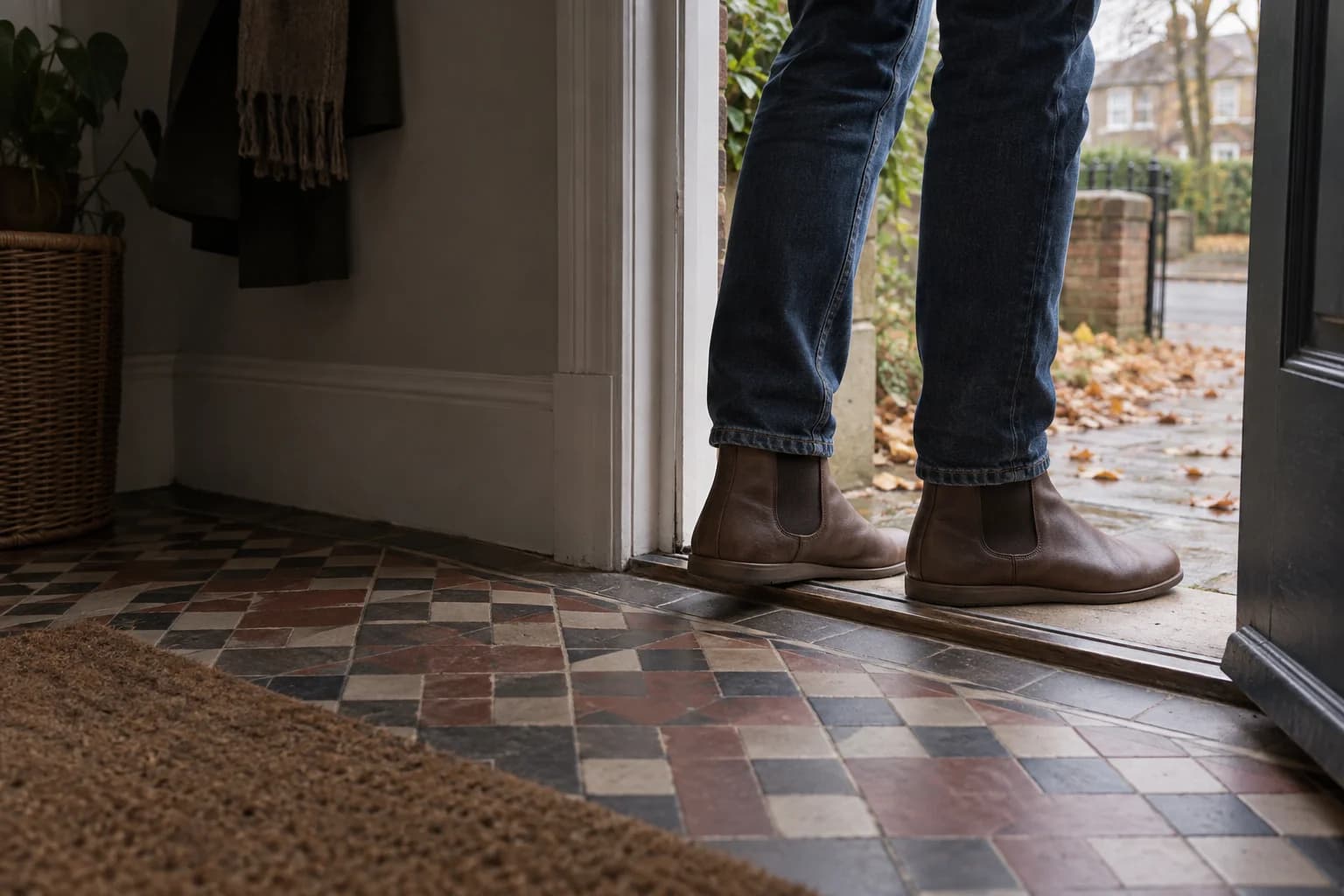
Before changing over to barefoot shoes, I lived in conventional Chelsea boots through the colder months. They pulled together a work outfit and were just as easy to slip on for a walk in the woods. The style was one thing I didn’t want to give up.
What I did want to give up was the squeeze around my toes. Fortunately, you can keep the elastic sides, ankle-height shape and easy pull-on design without the narrow front.
The trick is finding a pair that holds your foot in the right places. Foot volume and heel hold deserve as much attention as the toe box: a beautifully roomy boot is no use if your heel slips around inside it.
Find your pair
Four Chelsea boots to compare
At a glance
Which one fits your day?
Choose the feature you need most, then compare the fit.

Lems Chelsea Boot Waterproof
Choose it for
Wet commutes and everyday rain
Oiled leather, a waterproof membrane and Lems’ widest fit. Lems recommends going half a US size up because the leather and membrane make this version more substantial.
The trade-off: The 11 mm platform and stiffer upper make this the least barefoot-feeling option here, but the clearest choice for regular rain.
Shop Chelsea Waterproof at LemsView details
Mukishoes Chelsea Cork
Choose it for
A thin sole and something a little different
Black cork, cotton flannel lining and a 3.5 mm natural-rubber sole. Mukishoes says to measure with thick socks on if that is how you will wear them.
The trade-off: The light construction gives plenty of ground feel, but it is not a substitute for a waterproof winter boot.
Shop Chelsea Cork at MukishoesView details
Feelgrounds Chelsea
Choose it for
A familiar Chelsea shape without leather
A vegan synthetic-leather upper, soft lining and a familiar everyday shape. Feelgrounds says it fits true to size for most people, with a size up worth considering if its other models feel snug.
The trade-off: The upper is water-repellent, not fully waterproof. This is better suited to town and changeable weather than long wet walks.
Shop Chelsea at FeelgroundsView details
Xero Ridgeway Chelsea
Choose it for
A leather boot with a chunkier tread
Full-grain leather and a lugged outsole give the Ridgeway a more outdoorsy look. Xero says the men’s version runs small, but its current sizing page and product selector disagree on whether to go up half or one full size.
The trade-off: The chunkier tread adds capability and visual weight, but this Chelsea version is not sold as waterproof.
Check Xero sizing and fitShop Ridgeway Chelsea at XeroView detailsFor wet days: Lems
If keeping rain out is the main job, I would start with the Lems Chelsea Boot Waterproof. There’s also a women’s listing. The reason to choose it is weather protection; if thin soles and maximum ground feel matter more, I would skip it and start with Mukishoes instead.
For a thin sole: Mukishoes
The Mukishoes Chelsea Cork is the one I would start with for a lighter, simpler boot. The textured cork is what first caught my eye in the original guide, and the thin construction keeps it clearly distinct from the Lems. If regular rain is the problem you are solving, choose the waterproof option instead.
For a leather-free everyday boot: Feelgrounds
The Feelgrounds Chelsea is the straightforward leather-free choice for ordinary town wear. I would choose it over Mukishoes when you want the more familiar Chelsea look, but not as a substitute for a fully waterproof boot on prolonged wet walks.
For a more pronounced tread: Xero
The Xero Ridgeway Chelsea is the one I would try for a chunkier leather boot and more pronounced tread; there’s a women’s version too. The main caveat is sizing: Xero’s current men’s advice conflicts between its general sizing page and product selector, so check the live selector rather than guessing. This Chelsea is not sold as waterproof.
Getting the fit right
Start with length and toe shape
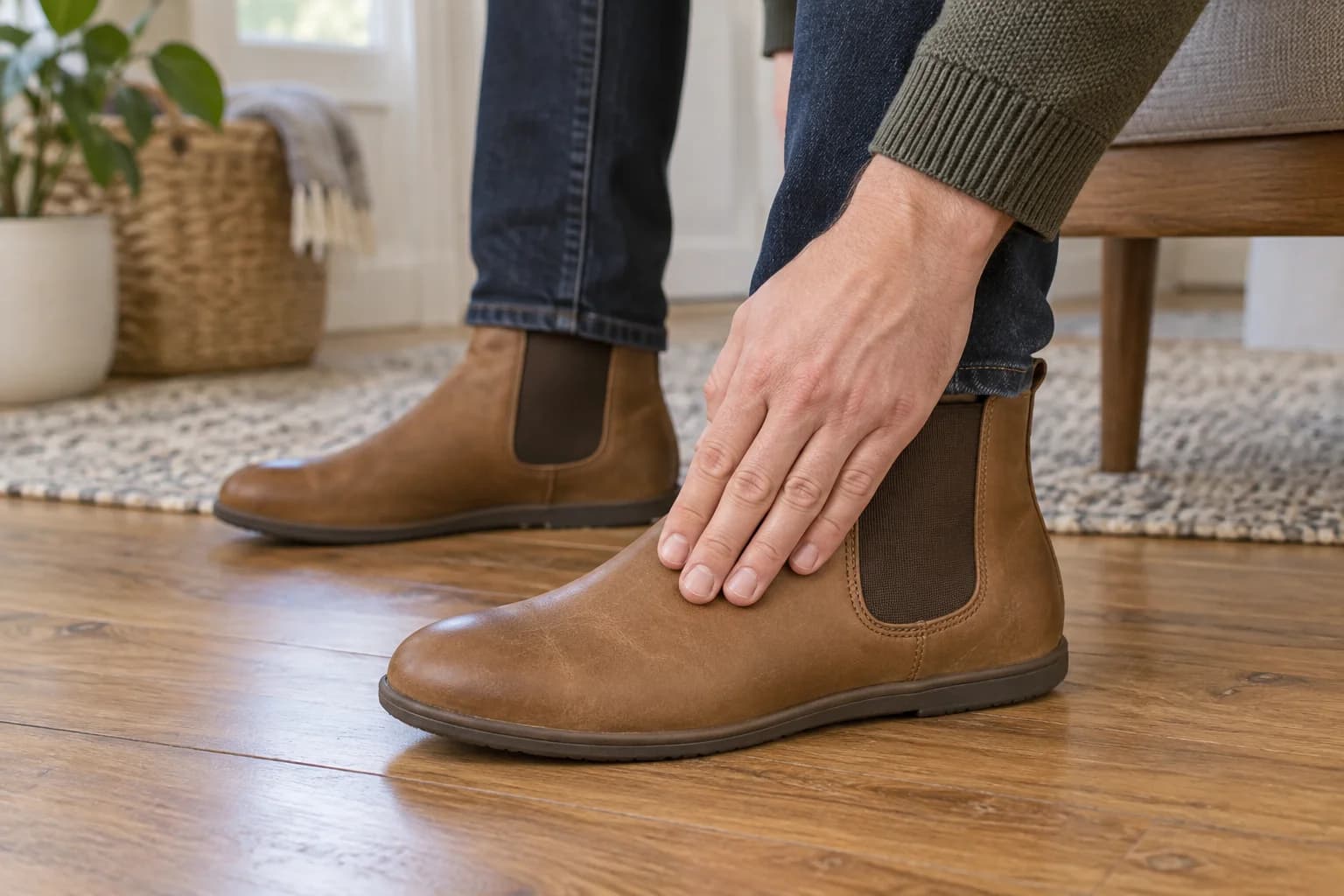
Measure both feet and use the chart for that model. Check whether the numbers refer to foot length or the inside of the boot before adding any extra allowance. Your toes need room to lie comfortably without touching the front or being pushed together at the sides.
For a durable baseline, the Genuine Men’s Brannock Device measures heel-to-toe length, heel-to-ball length and width. It is expensive, but it gives a more repeatable reading than cheap plastic sliders. The linked model covers men’s US sizes 4–16; use the corresponding Brannock model if you need a different calibration. A plastic device is a reasonable budget option for a rough starting point. Either way, treat the result as a baseline: brand widths are not standardised, and each model’s own chart still decides what to order.
Look at the outline as well as the width. A toe box that slopes sharply towards the little toe can feel different from a squarer shape, even when both are called wide.
Check over the instep, then walk
The instep is the top of your foot, where a lace-up boot would usually let you loosen or tighten the fit. A Chelsea has to get this right through its shape and elastic panels.
The maker evidence is useful but incomplete here. Lems describes the Waterproof as its widest fit, Feelgrounds says its Chelsea is true to size for most people, Mukishoes tells you to measure with the socks you intend to wear, and Xero’s current sizing advice conflicts. None of those sources gives a dependable high-to-low instep or heel-volume ranking, so I would not invent one.
You should be able to pull the boot on without a wrestling match, and the upper shouldn’t press painfully across your foot. Walk around indoors: if your foot slides forward or your heel keeps lifting out, the boot may have too much volume. Buying extra length to get more width can make this worse.
Use your normal socks
Try the boots with the socks you plan to wear. Thick wool socks can change the fit quite a lot. If the sock itself is narrowing your toes or taking up more room than expected, the socks guide helps you choose by shape, activity and thickness. A removable insole may give you another way to adjust the space, but it won’t rescue a boot with the wrong basic shape.
If your instep is difficult to fit, a lace-up boot gives you more adjustment. You can love the look of Chelseas and still decide another closure works better for your feet.
Make expensive boots last
My first recommendation is the boring one: do less, but do it before the boots look neglected. Brush off dry dirt, use only a cleaner the maker allows, and let wet boots dry naturally away from direct heat. I would not put a new pair next to a radiator or coat it in conditioner simply because it is leather.
For compatible smooth leather, my pick is Nikwax Waterproofing Wax for Leather. Use it when the outer starts soaking up water instead of beading it. It renews water repellency and helps keep smooth leather supple, but it is the wrong product for suede or nubuck and can darken lighter finishes. Check the boot maker’s advice and spot-test first. Most importantly, wax can help the leather outer; it cannot repair a leaking waterproof membrane.
I would reach for Renapur Leather Balsam instead when compatible smooth leather feels dry or stiff and conditioning is the real job. I would not buy both on day one. Clean first, decide what the leather actually needs, then use a small amount of the right product. The Mukishoes cork and Feelgrounds synthetic upper need their own maker-approved care, not a leather treatment.
And wait until the boots have passed the indoor fit test before applying anything. Once you know you are keeping them, a two-minute clean-and-check after muddy or very wet wear is the habit I would choose over an elaborate annual rescue.
The five-minute fit check
Try the boots indoors with the socks you will actually wear and keep the packaging intact. Stand still first: your toes should lie flat, the upper should not press across your instep, and the widest part of your foot should sit in the widest part of the boot.
Then walk, turn and use the stairs. A little heel movement can settle as the sole flexes; repeated lifting, your foot sliding forwards or your toes gripping to hold the boot on point to the wrong volume. Do not solve a width problem by adding unnecessary length.
Finally, check the returns cost and the conditions before wearing them outside. This matters with an unfamiliar overseas brand. If none of these shapes sounds right, the boots directory includes more Chelsea styles and lace-up alternatives, while the sizing guide explains how to compare your measurements with a model chart.